
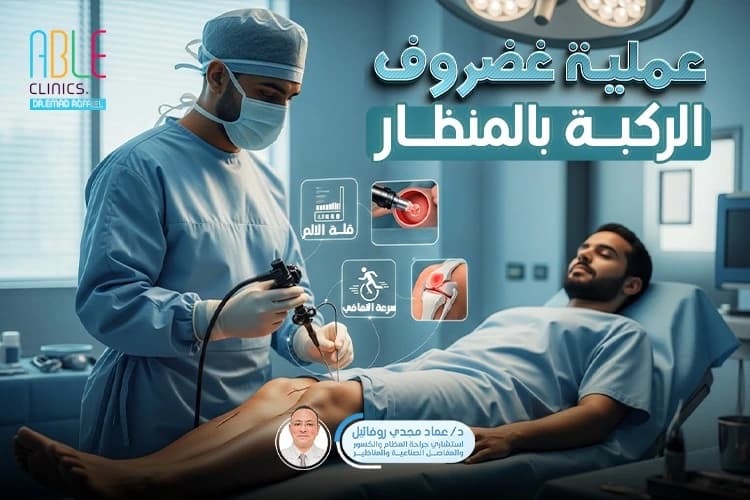
Arthroscopic knee cartilage surgery is the most common method for performing the majority of cartilage procedures. Using small surgical incisions, the surgeon can view the joint. Knee cartilage injuries are common conditions that cause severe pain and restrict movement. In many cases, the optimal treatment is surgical intervention via the arthroscopic technique.
Certainly, here is the English translation of the article about arthroscopic knee cartilage surgery:
What is Arthroscopic Knee Cartilage Surgery?
It is a minimally invasive surgical procedure used to diagnose and treat problems within the knee joint. The operation is performed by inserting a thin tube equipped with a tiny camera (the arthroscope) and small surgical tools through very small surgical incisions. This allows the surgeon to visualize the inside of the joint and repair the injury without the need for a large open incision.
Different Types of Arthroscopic Knee Cartilage Procedures
Treating knee cartilage is not limited to one procedure but involves a wide range of actions chosen by the doctor based on the type and severity of the injury:
-
Removal of Damaged Cartilage (Meniscectomy): In this procedure, the torn or damaged parts of the meniscal cartilage are removed, either partially or completely. This is one of the fastest and most common procedures.
-
Cartilage Repair: In cases of tears that are suitable for healing, the surgeon sutures the torn cartilage back into place.
-
Posterior Meniscus Resection: This procedure focuses on removing the damaged posterior part of the meniscus, especially if the tear in this area is difficult to access.
When Does a Patient Need Arthroscopic Knee Cartilage Surgery?
Doctors resort to surgery when conditions do not respond to non-surgical treatments such as rest and physical therapy. Generally, the decision for surgery is made in the following situations:
-
Large Cartilage Tear: Especially if it is causing persistent symptoms.
-
Joint Instability: If the tear causes recurrent knee locking.
-
Symptoms Not Improving: After several weeks of conservative treatment.
Preparing for Arthroscopic Knee Cartilage Surgery: What You Need to Know
Before surgery, your doctor will give you specific instructions. The most important ones include:
-
Fasting: You may be asked not to eat or drink for several hours before the procedure.
-
Medications: You must inform the doctor about all medications you are taking, as you may need to stop some of them before surgery.
-
Arrangements for Going Home: Since the procedure is performed on the same day (outpatient), someone must be available to help you get home.
What Are the Steps of Knee Arthroscopy?
Arthroscopic surgery is a relatively simple procedure, and most patients can return home the same day.
-
Anesthesia: The surgery is performed under general or regional anesthesia (local anesthesia from the waist down), depending on the patient's condition and the doctor's preference.
-
Inserting the Arthroscope: The surgeon makes very small surgical incisions (about 1 cm) around the knee joint. A thin tube containing a tiny camera (the arthroscope) is inserted through one of the incisions. This camera transmits a magnified image of the joint onto a screen, allowing the surgeon to clearly see the cartilage and internal tissues.
-
Repair or Removal: After identifying the location and type of tear, the surgeon uses precise instruments inserted through other incisions. The tear is either repaired by suturing the cartilage, or the damaged part is removed if repair is not possible.
-
Concluding the Procedure: Once the repair is complete, the arthroscope and instruments are removed, and the small surgical incisions are closed with simple stitches or surgical tape.
Benefits of Arthroscopic Knee Cartilage Surgery Compared to Traditional Surgery
Arthroscopic surgery significantly outperforms traditional (open) surgery in several aspects:
-
Less Pain: The small incisions cause much less post-operative pain.
-
Faster Recovery: The recovery period is shorter, allowing for a quicker return to daily activities.
-
Lower Risks: The probability of infections or other complications is reduced.
Risks and Complications of Arthroscopic Knee Cartilage Surgery
Although the surgery is very safe, there are potential and rare risks, including:
-
Infections: An infection may occur in the area of the surgical incisions.
-
Blood Clots: Clots can form in the leg, especially if there is a lack of movement after surgery.
-
Knee Stiffness: This may limit the range of motion if therapeutic exercises are not adhered to.
Recovery Period After Arthroscopic Knee Cartilage Surgery
The recovery period varies from one patient to another, but it is typically fast:
-
First Few Weeks: You may be advised to use crutches for a short period.
-
After 4–6 Weeks: The patient can gradually return to normal walking and light activities.
-
After 3–6 Months: A return to sports activities may be possible after the doctor's approval.
Therapeutic Exercises After Arthroscopic Knee Cartilage Surgery
Physical therapy is an integral part of recovery. A physical therapist will guide you through exercises to strengthen the thigh and leg muscles, increase the knee's range of motion, and restore balance. Adhering to these exercises is essential to ensure long-term results and prevent future injury.
In conclusion, arthroscopic knee cartilage surgery offers an effective solution for many knee problems. Understanding the steps of the procedure, the recovery phases, and the importance of adhering to physical therapy is your key to its success and the restoration of your full movement and strength.
Frequently Asked Questions (FAQ) About Arthroscopic Knee Cartilage Surgery
Can I drive after the procedure?
It is preferable to refrain from driving until you regain full control of the knee, which usually takes a few weeks.
When can I return to work?
If your job is sedentary (desk work), you can return within a few days. For jobs that require physical exertion, you may need a longer period.